

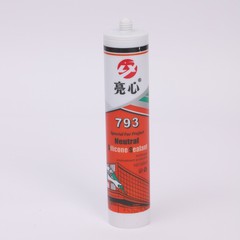
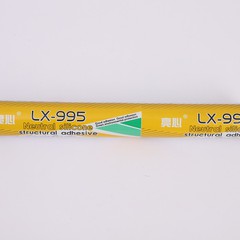
Silicone glass sealants can be classified into two categories based on their packaging: single-component and two-component. Single-component silicone sealants cure by reacting with moisture in the air, causing a change in their physical properties. Two-component sealants consist of two parts, A and B; neither part can cure alone, but they cure when mixed. Single-component silicone glass sealants are more common in the market.
Based on acidity/alkalinity, silicone glass sealants are also classified into acidic and neutral types. Acidic sealants are mainly used for general bonding between glass and other building materials. Neutral sealants overcome the corrosive properties of acidic sealants and their reaction with alkaline materials, thus having a wider range of applications and a slightly higher market price. A special type of neutral glass sealant is silicone structural sealant, which is used directly for structural or non-structural bonding of metal and glass in glass curtain walls. Therefore, it has the highest quality requirements and product grade among glass sealants, and its market price is also the highest.
Color Classification: Silicone glass sealant is available in various colors, with black, porcelain white, transparent, silver gray, gray, and bronze being the most common. Other colors can be customized upon request.
Weather Resistance and Mildew Resistance Classification: Weather-resistant silicone sealant is suitable for weather sealing of various curtain walls, especially recommended for glass curtain walls, aluminum composite panel curtain walls, and dry-hanging stone. It is suitable for sealing joints between metal, glass, aluminum, ceramic tiles, acrylic glass, and coated glass; and for sealing joints on concrete, cement, brick, rock, marble, steel, wood, anodized aluminum, and painted aluminum surfaces. In most cases, a primer is not required.
Mildew-resistant silicone sealant is the future trend. Mildew-resistant silicone sealant lasts longer, is more durable, and less prone to peeling than ordinary sealants, making it particularly suitable for damp environments prone to mold growth, such as bathrooms and kitchens.