

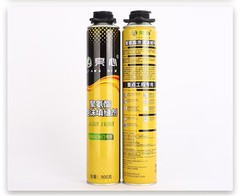
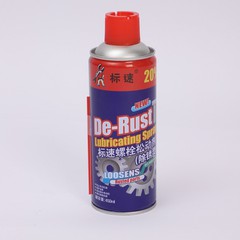
Polyurethane foaming agents are a product of the cross-fertilization of aerosol technology and polyurethane foam technology. They are produced in both tube and gun forms, exhibiting a sponge-like state. Foaming agents used in the production of microporous foam plastics are generally classified into two types: physical and chemical. This classification is based on whether the gas generation is a physical process (i.e., volatilization or sublimation) or a chemical process (i.e., the destruction of chemical structures or other chemical reactions).
Polyurethane foaming agent, also known as single-component polyurethane foam sealant, is commonly called foaming agent, foaming adhesive, or PU sealant. The English term PU FOAM is a product of the cross-fertilization of aerosol technology and polyurethane foam technology. It is a special polyurethane product that contains polyurethane prepolymer, foaming agent, catalyst, and other components in a pressurized aerosol can. When the material is sprayed from the aerosol can, the foamy polyurethane material rapidly expands and reacts with moisture in the air or the substrate it comes into contact with to form foam. It has a wide range of applications. It has the advantages of pre-foaming, high expansion and low shrinkage. The foam has good strength and high adhesion. After curing, the foam has multiple effects such as filling gaps, bonding, sealing, heat insulation and sound absorption. It is an environmentally friendly and energy-saving building material that is easy to use. It can be used for sealing and plugging leaks, filling gaps and fixing and bonding, heat insulation and sound insulation. It is especially suitable for sealing and plugging leaks and waterproofing between plastic steel or aluminum alloy doors and windows and walls.