

Door and Window Installation: Sealing and fixing doors and windows to walls.
Advertising Models: Model and sand table creation; display board repair.
Sound Insulation and Noise Reduction: Filling gaps during the renovation of voice rooms, broadcasting studios, etc., providing sound insulation and noise reduction.
Landscape Design: Flower arranging and landscaping; lightweight and aesthetically pleasing.
Daily Maintenance: Repairing holes, gaps, wall tiles, floor tiles, and flooring.
Waterproofing and Leak Sealing: Repairing and sealing leaks in water pipes, sewers, etc.
Packaging and Transportation: Conveniently wrapping valuable and fragile goods; time-saving, fast, shockproof, and pressure-resistant.
Usage Instructions:
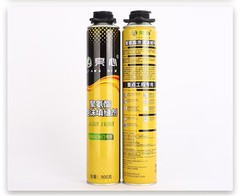
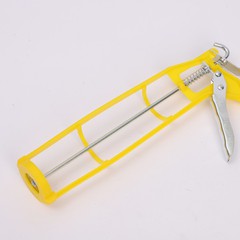
Before application, remove oil and dust from the surface and spray a small amount of water. Before use, shake the polyurethane foam can for at least 60 seconds to ensure the material is evenly distributed. If using a gun-type polyurethane foam, invert the can and thread it onto the spray gun, rotate to open the flow valve, adjust the flow rate, and then spray. If using tubular polyurethane foam, screw the plastic nozzle onto the valve thread, align the plastic tube with the gap, and press the nozzle to spray. Pay attention to the spraying speed; generally, spray to half the required filling volume. When filling vertical gaps, work from bottom to top. When filling gaps such as those in the ceiling, uncured foam may sag due to gravity; it is recommended to provide appropriate support immediately after filling, and remove the support only after the foam has cured and adhered to the gap walls. The foam will detach after about 10 minutes, and can be cut after 60 minutes. Cut off excess foam with a knife, then apply cement mortar, paint, or silicone sealant to the surface. Alternatively, weigh the foaming agent according to technical requirements, dilute it with 80 times the amount of water to prepare a foaming solution; then use a foaming machine to aerate the solution into foam, and add the foam to a well-mixed magnesium oxychloride cement slurry according to the prescribed amount, stirring thoroughly. Finally, feed the foamed magnesium oxychloride slurry into a molding machine or mold to form the foam.
Construction Precautions: The normal operating temperature of the polyurethane foam can is +5~+40℃, with an optimal operating temperature of +18~+25℃. In low-temperature conditions, it is recommended to place the product in a constant temperature environment of +25~+30℃ for 30 minutes before use to ensure optimal performance. The cured foam has a temperature resistance range of -35℃~+80℃.
Polyurethane foam is a moisture-curing foam. It should be sprayed onto a damp surface; the higher the humidity, the faster the curing. Uncured foam can be cleaned with a cleaning agent, while cured foam should be removed mechanically (sanding or cutting). Cured foam will yellow after exposure to ultraviolet light; it is recommended to coat the cured foam surface with other materials (cement mortar, paint, etc.). After use, clean the spray gun immediately with a dedicated cleaning agent.
When replacing the can, shake the new can thoroughly (at least 20 times), remove the empty can, and quickly replace it with the new can to prevent the spray gun connection from hardening.
The flow control valve and trigger of the spray gun control the foam flow rate. When spraying stops, immediately close the flow valve clockwise.
Safety Precautions:
Uncured foam is sticky to skin and clothing; avoid contact with skin and clothing during use. The polyurethane foam can contains a pressure of 5-6 kg/cm² (25℃). During storage and transportation, the temperature should not exceed 50℃ to prevent can explosion. Avoid direct sunlight and keep out of reach of children. Empty cans, especially partially used ones, should not be discarded carelessly. Do not burn or puncture empty cans. Keep away from open flames and flammable or explosive materials. The construction site should be well-ventilated. Workers should wear gloves, work clothes, and safety goggles, and should not smoke. If foam gets into eyes, rinse with water and seek medical attention. If it gets on skin, wash with soap and water.