

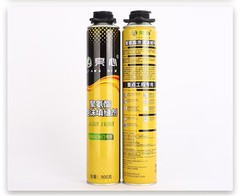
The curing process of polyurethane foam consists of several stages: initial expansion, surface drying, internal curing, and complete hardening.
First, expansion begins within 5-15 seconds of spraying, rapidly increasing in volume to its maximum. This stage is greatly affected by ambient humidity; higher humidity results in a faster reaction.
Next is the surface drying stage, typically lasting about 10 minutes (at room temperature of 20°C and relative humidity of 50%). At this point, a thin film forms on the surface of the foam, making it no longer sticky, but the interior remains soft. This is the optimal time to adjust the shape.
The internal curing stage requires a longer time. In summer (temperature 25-30°C), complete curing takes approximately 4-6 hours; in winter (temperature 0-10°C), it may extend to 24 hours or longer. The gel time, from spraying to the loss of fluidity, is generally 5-10 minutes, influenced by the catalyst and temperature.
Factors affecting curing time include temperature, humidity, and foam thickness. For every 10°C increase in temperature, the reaction rate doubles. Low humidity delays curing; therefore, water spraying can assist in dry environments. When the colloid thickness exceeds 5cm, internal heat buildup may accelerate curing but also increase the risk of voids.
In humid southern regions, the curing time is shorter, facilitating application. In dry, cold northern regions, insulation measures are necessary. In practical applications, it is recommended to wait 24 hours before subsequent operations, such as cutting or painting, to ensure strength.
Under special conditions, such as underwater applications, the curing time may be shortened because water directly participates in the reaction. However, it should be noted that excessively rapid curing may affect uniformity.
Understanding these processes can help users optimize application and avoid application errors.