

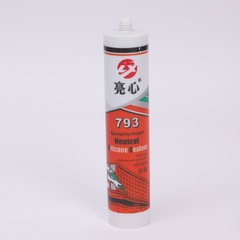
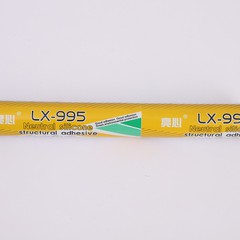
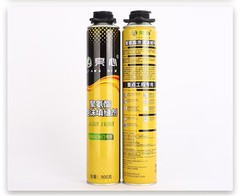
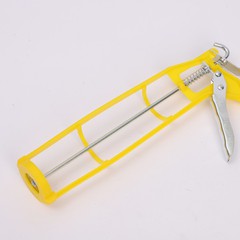
Structural adhesives are high-strength adhesives (compressive strength > 65 MPa, steel-to-steel tensile bond strength > 30 MPa, shear strength > 18 MPa), capable of withstanding heavy loads, and resistant to aging, fatigue, and corrosion. They exhibit stable performance throughout their expected lifespan and are suitable for bonding structural components subjected to high forces.
Non-structural adhesives have lower strength and poorer durability, and can only be used for ordinary, temporary bonding, sealing, and fixing; they cannot be used for bonding structural components.
Structural adhesives are high-strength, peel-resistant, impact-resistant, and easy to apply. They are used for bonding similar or dissimilar materials such as metals, ceramics, plastics, rubber, and wood. They can partially replace traditional connection methods such as welding, riveting, and bolting. The stress distribution at the bonding surface is uniform, with no heat-affected zone or deformation of the parts.
Structural adhesives are widely used in engineering, primarily for strengthening, anchoring, bonding, and repairing components; such as bonding steel, bonding carbon fiber, rebar installation, crack reinforcement and sealing, hole repair, road spike bonding, surface protection, and concrete bonding.